
Pine Marten in Worthing - the best laid plans
Fran Southgate
Nature Recovery Manager
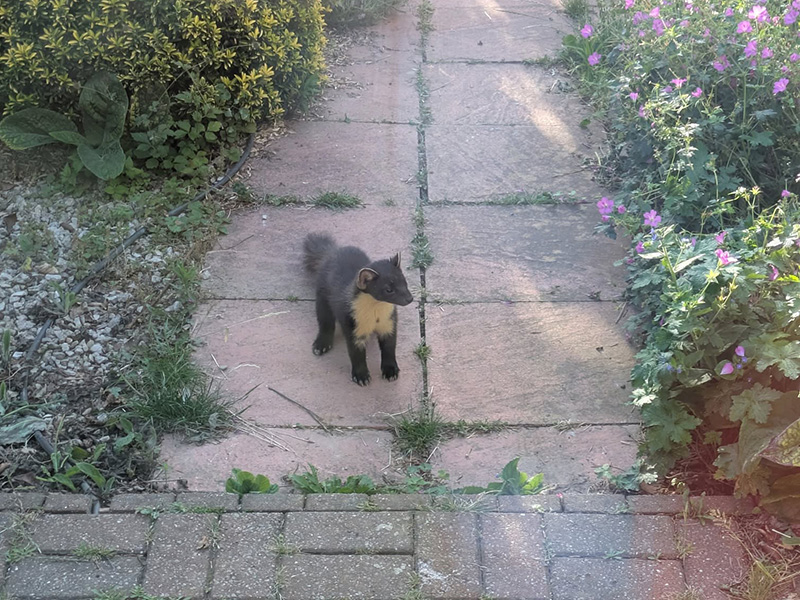
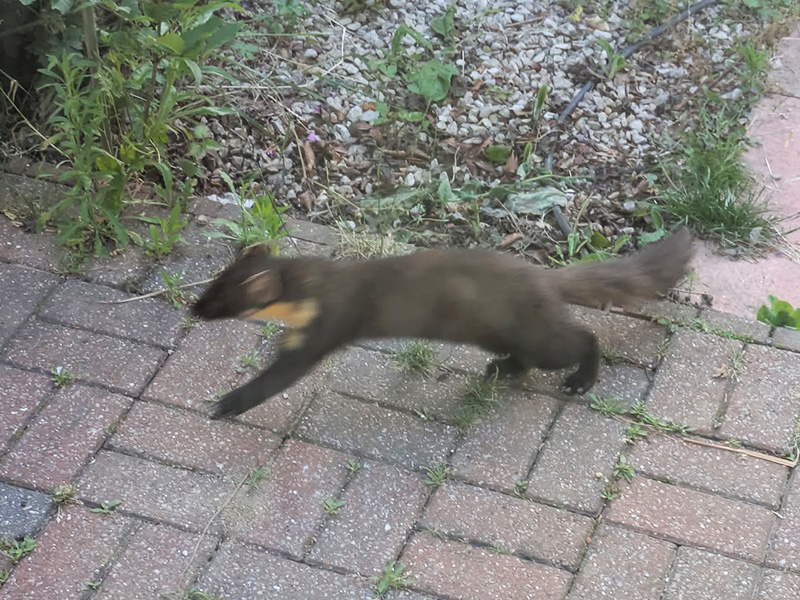
How amazing it was to open up my emails to see a flurry of excitement about a Pine Marten in Worthing. This highly unusual sighting of one of our most rare native creatures came with stunning photos of a very healthy-looking animal dancing around in a suburban garden. We have checked with local animal rescue centres and, as far as we can tell, it is a wild animal.
The reason for the excitement is that the nearest known breeding colony of Pine Marten is in the New Forest in Hampshire. The only verified sighting of a Pine Marten in the South East this year was in Surrey, and the last known record of Pine Marten in Sussex was nearly a century ago. If it’s not a Pine Marten ‘bombing’, then it is a very exciting development in the recovery of native species to Sussex.
Ironically, Sussex Wildlife Trust have been supporting the South East Pine Marten Restoration Project for the last three years. This project has been undertaking stakeholder engagement and feasibility studies to show where the most suitable habitats and migration routes for Pine Marten are. Worthing was definitely not on the list! And we are waiting for the feasibility assessment to be complete before we decide whether to continue with plans for a reintroduction. If we do, we will need to obtain permissions from regulators before we get the go-ahead. These are required by law to protect wildlife and ensure the welfare of any Pine Martens we might release.
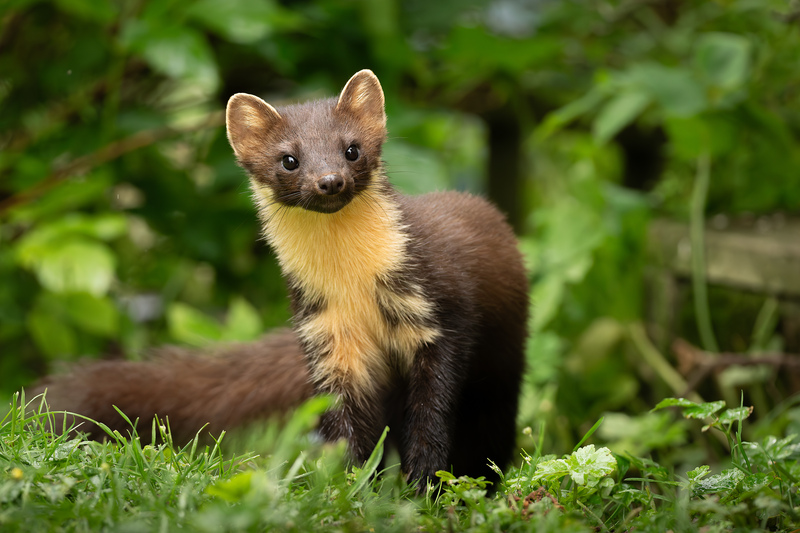
It goes to show how resilient wildlife can be. If we restore the resources, habitat networks and movement routes they need, nature can and will recover. The best laid plans of humans are often unknown to wildlife, and in the end, given the opportunity, species will behave instinctively and in a way that we often can’t predict. I can’t wait to see where the next Pine Marten appears!
To allay any concerns expressed on social media
- This is a native, wild animal. We would not attempt to catch or trap the animal unless it is obviously injured or sick.
- We have contacted local wildlife rescue centres and as far as we can tell this is a free roaming, wild animal.
- If you see a Pine Marten – please report it here NPMMP Incidental Pine Marten Sightings and email the South East Pine Marten Restoration Project [email protected]. Please take a photo or video if you can and do your best to check that it is not a Polecat, Stoat, Mink or Ferret
The South East Pine Marten Restoration Project is a Partnership with Kent Wildlife Trust, Wildwood Trust, the Conservators of Ashdown Forest, Forestry England and Sussex Wildlife Trust.
Comments
Thank you for Fran Southgate’s calm and reasonable article about the Worthing pine marten (I have studied pine martens for many years). It would be nice to think that this animal is a disperser from the New Forest population, but a more likely scenario is that it is an animal (or descendent thereof) translocated covertly from Scotland and released in habitat that has not been properly assessed for its suitability. We have seen a big increase in this type of activity since Emma Sheehy’s work on pine martens suppressing grey squirrel populations was published in 2018. Regrettably these covert releases of small numbers, often in poor habitat, tend not to form populations, so they are a waste of precious pine martens!
02 Jul 2026 08:26:00
Johnny Birks may well be right. However, pine martens do travel considerable distances over unlikely terrain. In 2023 a male pine marten seen at Spurn Point on the north side of the Humber Estuary was identified as the same one seen a month earlier on camera traps in Dalby Forest, some 60 miles further north.
03 Jul 2026 12:42:00
Johnny Birks may well be right. However, pine martens do travel considerable distances over unlikely terrain. In 2023 a male pine marten seen at Spurn Point on the north side of the Humber Estuary was identified as the same one seen a month earlier on camera traps in Dalby Forest, some 60 miles further north.
05 Jul 2026 10:07:00